
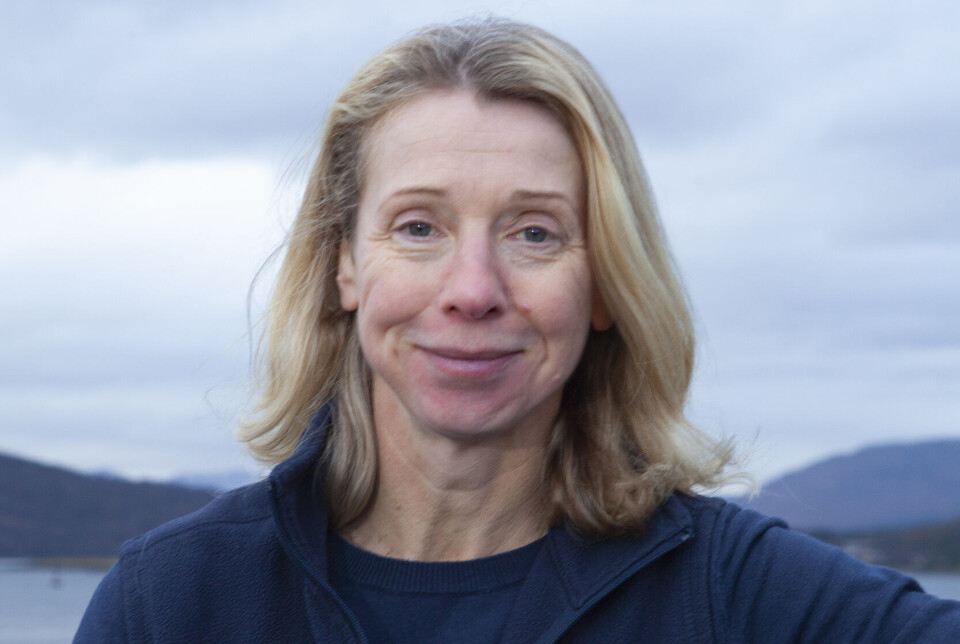
Looking back, thinking ahead: Sarah Riddle
Fish Farming Expert has asked individuals connected to the aquaculture industry about their 2025, and what they hope for in the coming year. Today we feature Sarah Riddle, head of research and innovation for the Sustainable Aquaculture Innovation Centre (SAIC).
What have been the highlights for you professionally in 2025?
A standout moment was supporting the Scottish Pavilion at Aqua Nor in August. Working with Highlands and Islands Enterprise (HIE), we brought 17 exhibitors from Scotland’s aquaculture supply chain and research base to Norway, with SAIC providing significant in-kind support across the Pavilion.
I chaired a panel on the future of aquaculture with an excellent international group and contributed as a panellist on another session on innovation clusters. We also facilitated a bilateral meeting between the Scottish and New Zealand governments.
Shellfish and seaweed
More widely, we supported events across the sector, including annual shellfish (Association of Scottish Shellfish Growers) and seaweed (Scottish Seaweed Industry Association/Seaweed Scotland) conferences, offering bespoke, in-kind, support packages, as well as our usual networking, chairing, and exhibiting activities.
Closer to home, another highlight was bringing new people into the team. We welcomed three new colleagues in knowledge exchange and finance, and they have integrated brilliantly with existing team members and are already delivering impact.
On the research front, we supported diverse and impactful projects and worked hard to share these stories widely. We made great progress on creating case studies for new and legacy projects, complemented by project animations to help reach new audiences.

Notable case studies include:
- Wellfish (animation coming soon) - Biomarkers for early disease detection in Scottish salmon
- Immulice - Developing a recombinant gut antigen and evaluating its impact on adult sea lice: ImmuLice
- HABs - From detection to forecast: tackling harmful algal blooms in Scottish aquaculture and High-resolution ocean modelling for northern Scotland and the Shetland isles
- ExPAND - Expanding environments, physics, and accuracy in NewDEPOMOD
- Tritonia - Georeferenced 3D photogrammetry for monitoring the impact of aquaculture on hard seabeds (full R&D project) (3rd project in a series)
Workshops
We delivered several high-value workshops as part of our commitment to the sector during this transition period (ending March 2026), designed to tackle specific challenges, encourage knowledge exchange, and produce tangible outputs for long-term value:
- Halibut workshop (March): bringing together key players from Europe and Canada to explore opportunities and challenges in halibut farming. In partnership with the Agri-Tech Centre, Amar Seafood and Otter Ferry Seafish.
- Shining a light on prevention over cure (April): a sector-wide workshop on shifting fish health strategies from treatment to prevention, identifying high-impact actions such as improved biosecurity, better data use, and proactive adoption of AI.
- From nets to networks (October): exploring AI, automation, and robotics in aquaculture and fisheries, at the National Robotarium, and in partnership with Seafood Scotland
- Climate-ready salmon aquaculture: strategies for the future (November) – examining climate impacts on salmon farming and setting priorities for resilience, sustainable feeds, and workforce upskilling.
While our team might be smaller, our output remains strong – we’re a group of highly experienced
‘do-ers’. Together, we bring a wealth of expertise
Reduced funding means that SAIC has inevitably slimmed down over the past 18 months. What is its core role now, and can it carry it out effectively?
We’ve restructured but we’ve always kept our focus on what matters most for the sector: developing and delivering projects and sharing outcomes through knowledge exchange for the benefit of everyone.
While our team might be smaller, our output remains strong – we’re a group of highly experienced ‘do-ers’. Together, we bring a wealth of expertise and make a well-rounded unit. We’re active and visible and you’ll always find us at major sector events at home and abroad - working on conversations and connecting people, extending our network, promoting and sourcing funding, and developing a pipeline of much-needed projects.
Our impact is clear from our outputs:
- Projects delivered on time and on budget, with a knowledge-exchange focus on case studies and animations that showcase research outcomes
- Well-attended workshops tackling sector challenges
- Continued growth in our network of consortium members (almost 400)
- An enhanced digital presence, thanks to greater investment in social media and our community engagement
While we’re not currently in a position to directly fund projects, we’re proactive in promoting funding opportunities from Scotland, the UK, Europe, and beyond. Our funding page, social channels, and newsletter are regularly updated to help the sector access resources.
Fundamentally, our ethos hasn’t changed. We’re still the trusted, independent, science-based organisation you’ve always known us to be - agnostic and open to all ideas, not paid to promote any one way of thinking, and providing a collaborative space for the sector to innovate and thrive.
What will be the most significant opportunities for SAIC in the coming year?
Our biggest priority - and opportunity - is securing long-term funding to sustain SAIC beyond March 2026, and we continue to have positive discussions with the Scottish Government to that effect. At the Sottish Seafood Industry Association conference in November, Mairi Gougeon (Cabinet Secretary for Rural Affairs, Land Reform and Islands), reaffirmed SAIC’s importance and said “we [Scottish Government] continue to work with stakeholders to develop long-term arrangements to sustain the work of the Sustainable Aquaculture Innovation Centre beyond March 2026".
Looking forward, we’re excited about the prospect of returning to a position where we can directly fund and co-fund projects, as well as participate in larger consortium bids for Scottish, UK, and European funding. Alongside this, we’ll continue to project-manage initiatives that deliver practical, impactful outcomes for the sector.
Our role is clear: to support the sector by being technology-agnostic, independent, and focused on highlighting change, challenges, and opportunities. That means continuing to connect stakeholders, share knowledge, and drive innovation where it’s needed most.
SAIC’s remit includes finfish, shellfish, and seaweed farming. What do you see as the most significant opportunities and challenges for those three forms of aquaculture in Scotland and globally in 2026?
I think 2026 is going to be defined by how effectively the [whole aquaculture] sector can show it is adapting to climate resilience. The challenge of increasing production efficiency - while keeping welfare at the heart of the matter - remains a top priority.
There is great energy and drive to keep improving - it’s been a long-standing focus for aquaculture. I believe the momentum across the sector shows a strong commitment to grow and finding solutions to challenges.
Our transition to a new model gives SAIC the opportunity to energise innovation support, focusing on solutions that are practical, scalable, and evidence-led. I think if we can show we are tackling these challenges - with the right partnerships and innovation projects – then Scotland can lead the way globally, with SAIC acting as the catalyst for that progress.
Tomorrow: Ben Hadfield, chief operating officer for Mowi Scotland, Ireland, the Faroes, and Canada East.


