
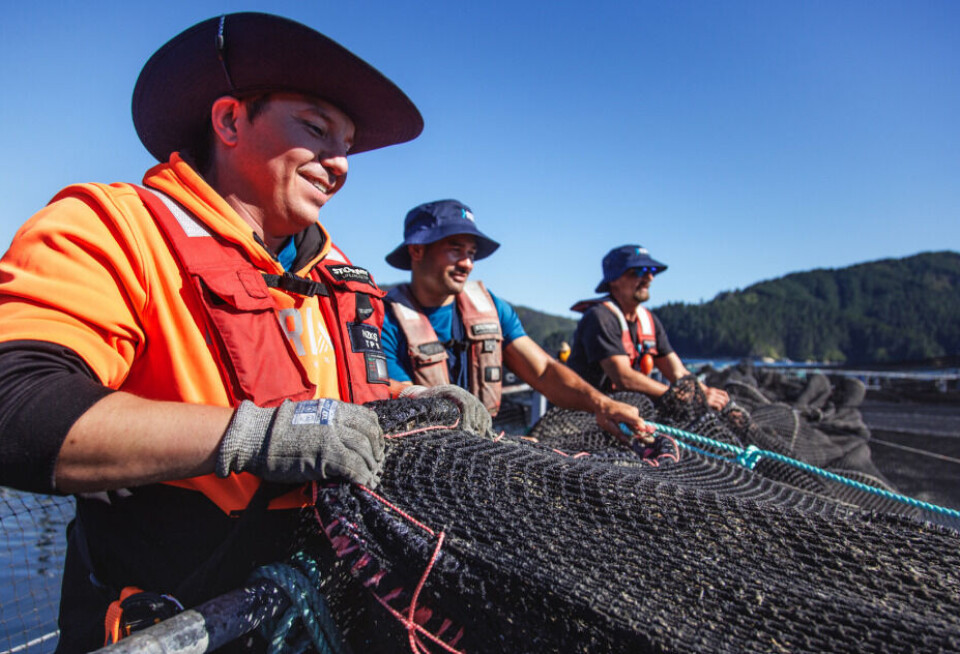
Record results for NZ King Salmon
Strong fish performance leads to £12.8m net profit
New Zealand King Salmon (NZK) has reported record results for its 2026 financial year, which ended on September 30.
NZK, which farms chinook salmon (Oncorhynchus tshawytscha) in the sounds at the top of New Zealand’s South Island, made a net profit of NZ $30.7 million (£12.8m) compared to a net loss of NZ $6.3m for the eight-month period ended September 30, 2025. The difference in length of reporting periods is due to a change in the balance date.
Operating profit (EBIT) increased from NZ $1.2m (from February to September 2025) to NZ $29.9m for FY26, and EBITDA, a different measure of operating profit, was NZ $39.4m, compared to $7.1 million for the previous eight months.
Sales volumes for FY26 increased to 5,885 tonnes compared to 3,260 tonnes in the eight months before that, and revenue increased to $211.4m in FY26 from $117.8m in the previous eight months.

Above guidance
“It is pleasing to report a record result for NZK, with FY26 pro-forma EBITDA of $39.4m coming in slightly above our most recent guidance range of $36m to $39m,” said company chairman Mark Dewdney.
“Strong fish performance supported these record earnings and the upgrades to our market guidance during the year, reflecting strong execution across the business.
“This year affirms our confidence in our stable platform from which to grow. The board is pleased with the operational performance, and the measured and carefully sequenced approach to future growth.”
NZK is guiding for EBIT of between NZ $21m and NZ $30m for 2027, based on a predicted harvest of between 7,600 and 8,800 tonnes (gilled and gutted), up from 5,993 tonnes harvested in FY26, although it is also warning that it will face increased costs.
Summer diet
“A key driver of the positive FY26 result was the very strong aquaculture performance,” said chief executive Carl Carrington. “This reflects a number of initiatives, including our summer diet, increased grading to remove non-performing fish, selective breeding for resilience and a continued focus on operational execution.
“We also continued to make tangible progress against our growth plans. The Ronja King wellboat was integrated into our farming operations, the two Blue Endeavour pilot pens were deployed offshore, and planning and design work progressed for both Cloudy Bay, our future processing facility, and our pilot recirculating aquaculture system (RAS).

“Looking ahead, in FY27 we will continue to build our biomass and invest in our growth pathway. Higher harvest volumes will offset the forecast increased costs including significantly higher fish feed and wellboat operations. While aquaculture performance will never be linear, the business is well prepared to manage variability and pursue future growth. We remain focused on disciplined execution and risk management, carefully sequencing our investments and maintaining a strong balance sheet.”
First wellboat in NZ
The 57-metre Ronja King is leased from wellboat operator Sølvtrans and arrived in April after a journey from Norway that took more than two months. It is the first wellboat in New Zealand and is expected by NZK to increase annual harvest volumes by around 2,000 tonnes. The annual lease costs of the wellboat are approximately NZ $8.9m (£3.72m / NOK 48m) but will be covered by the productivity increases it is expected to enable.
The wellboat, which has two well tanks with a combined well capacity of 1,000 cubic metres, is also essential to NZK’s Blue Endeavour offshore pilot project, which involves two pens moored 7km offshore in the Cook Strait/Te Moana-o-Raukawa.
The wellboat was used to stock a test batch of fish in the pens in June. The fish are spending approximately six months in the offshore environment, before being shipped back to one of NZK’s inshore farms, where they will spend the summer period before harvest.
Full pilot cycle
“A representative pilot cycle requires a complete growout period of ~10 months, including exposure to summer conditions, to generate meaningful biological, operational and commercial data,” writes NZK in its newly published 2026 report.
“The first representative pilot cohort of fish are anticipated to be transferred to the Blue Endeavour site by the end of 2026, marking the commencement of the first full pilot cycle.
“We remain pleased with the performance of the infrastructure and fish, and we look forward to running the subsequent two full pilot cycles prior to commercial development decisions being made. Completing a robust pilot programme remains critical to building confidence in future investment decisions and determining how open ocean farming can support the long-term growth of New Zealand King Salmon.”

Chilean RAS technology
The pilot RAS is planned at NZK’s Tentburn hatchery in Canterbury.
“Fresh water is critical for salmon farming, and RAS provides a pathway to increase smolt production within our existing freshwater footprint. A commercial-scale RAS will also be required to provide the smolt needed to support Blue Endeavour at scale,” writes NZK.
The pilot will use modular technology developed by Chilean company Blue Waters. NZK said independent modules allow it to test and refine the technology before making larger investment decisions, while providing greater control over factors such as oxygen and lighting.
Detailed design and consenting was finished in October 2026, with construction targeted for completion early in FY28. Two modules will initially be installed, with the option to add a further two following the pilot phase.


