
Loch Alba takes its next step towards semi-closed fish farms
Group asks for scoping opinion for 4,800-tonne project in Loch Nevis
Loch Alba Group is moving forward with plans for semi-closed containment in Scotland by asking Highland Council to take a first look at a proposed 4,800-tonne salmon farm in Loch Nevis.
The group, owned by Gael Force Group founder and managing director Stewart Graham, has asked the council to provide an environmental impact report (EIR) scoping opinion ahead of a potential application for planning permission.
An EIR is an essential and important part of a fish farm application, and a scoping report written for Loch Alba Group by Glasgow-based Environmental Resources Management Ltd (ERM) has been provided to support a request for the scoping opinion from the council.
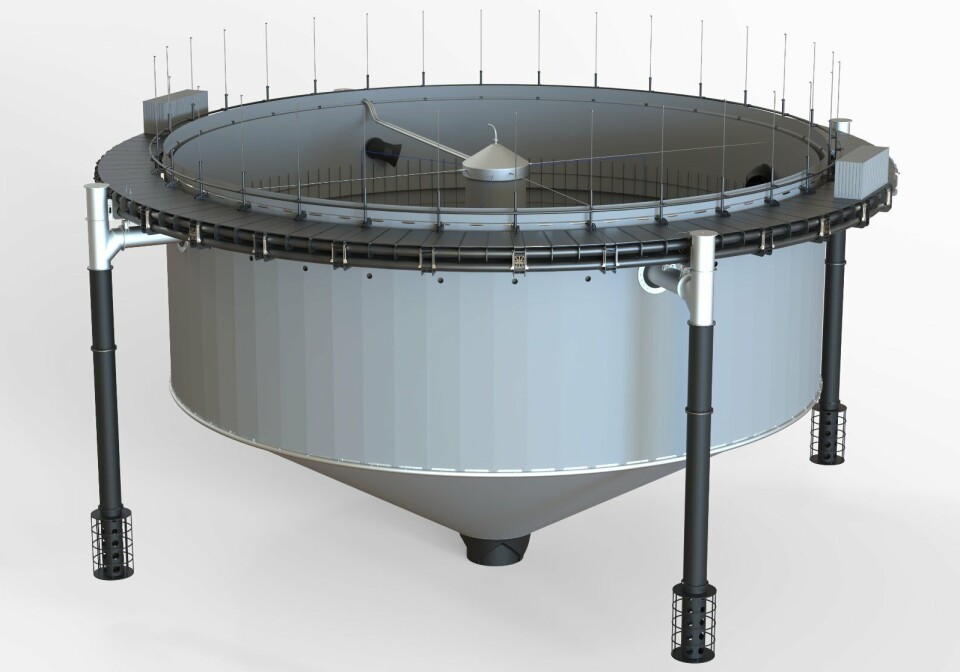
Loch Alba Group anticipates siting up to six Gael Force SeaQureWells semi-closed units on the Loch Nevis site, together with a central primary water treatment raft, service barge, oxygen-generation rafts, mooring system, floating feed/ oxygen/ data/ power/ wastewater connections, navigational and underwater lighting, and associated vessel activity.

The SeaQureFarm concept is intended to provide greater control of the farmed environment and reduce a number of environmental and fish-welfare interactions associated with conventional open-net aquaculture. ERM says the farm’s design remains subject to refinement through the EIA and consenting process.
Pre-application consultation has been undertaken through the Consenting Task Group (CGT) process, with input from Highland Council, the Scottish Environment Protection Agency (SEPA), Naturescot, the Marine Directorate, Historic Environment Scotland and other relevant stakeholders. The CGT process is designed to streamline consenting by enabling a farmer to apply for different permissions at the same time, instead of one after another.
SeaQureWells have an impermeable outer layer and an inner net, both supported by a broad float collar.
Four pumps per pen
ERM says water for each enclosure will be pumped by Framo SX1000 high-flow, water lubricated submersible pumps located inside four riser pipes that are suspended from the float collar.
“These four pumps will operate in tandem, with the two pumps that are ‘on duty’ providing all the required flow rate, the other two pumps rotating at very low RPM. The pumps that are on duty switch daily,” ERM explains.
“The water will be pulled from below the top 20 metres of the water column (the planktonic life stage of sea lice typically lives at a depth of 5 m to 8 m) which greatly reduces the likelihood of sea lice entering the system and prevents a breeding population becoming established in the enclosure.”
It says that similar semi-contained systems used in Norway, Canada and the Faroe Islands have never had to treat for sea lice over multiple years of operation in multiple locations, while neighbouring open net pens co-located on the same licence have required sea lice treatments.
Sludge collection
Water exits a SeaQureWell through its central outlet column that is perforated along its full height, and then out the base of the enclosure.
Uneaten feed and faecal waste settles and collects at the bottom of the system in sludge collection bins and is pumped out using airlift pumps via an external discharge hose to a filter system operating in a central location near the pens, which de-waters the sludge to 10% dry matter before it is then pumped to the service barge for processing to a 90% dry matter pelleted product.

A mortality ensiler will also be housed on the barge, and it will also store and distribute feed, and be equipped with combined heat and power systems with hybrid battery systems to generate and supply power to the sludge process line and to oxygen generators on modular rafts.
Loch Alba Group anticipates daily visits by workboats to the farm from a shore base at Mallaig, and a weekly feed boat delivery.
Early stage
“The design of the development is at an early stage and will continue to be refined through the EIA and consenting process,” writes ERM.
Two farming models are currently being considered: a complete entry to harvest farming model; and a post-smolt model.
The post-smolt model will have salmon reared from approximately 80-250 grams for up to 10 months to 0.7-1.5 kg before transporting them live to another site for on-growing.
“The rearing process would be completed within five to 10 months. The ‘post-smolt’ would then be taken directly from the enclosures on wellboats to other farming sites to complete their growth to 5 kg+ average weight.”
It is expected that the construction phase of the development will take approximately 18 months, depending on the final design, says ERM.
The operations will be staged over a number of years, starting with a lower biomass and fewer pens, and gradually working up to full licensed biomass. The staging plan has not yet been finalised but will be presented with the planning application.


