Another offshore fish farm is being tested in China
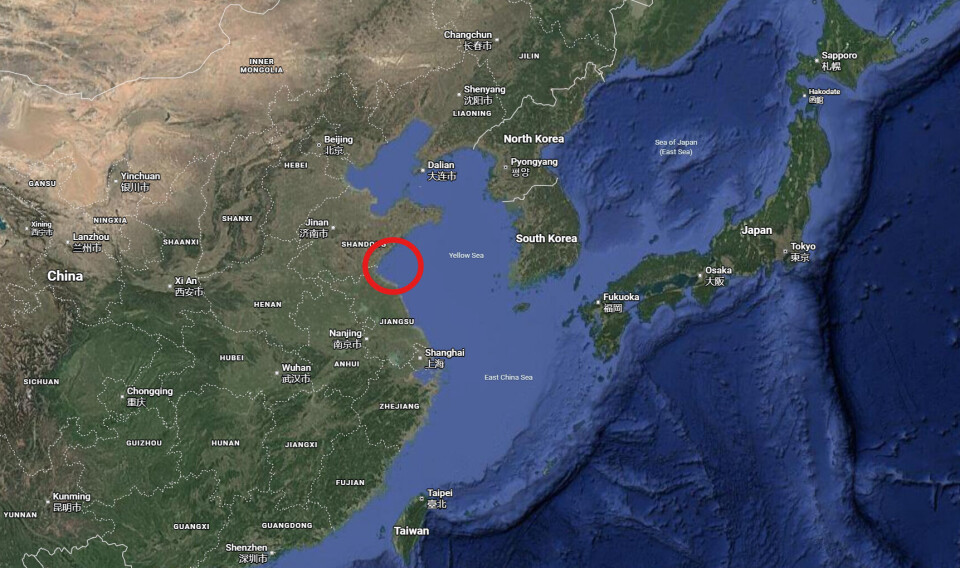
A seabed-supported offshore fish farm has been sunk into place in Haizhou Bay, China, reports aquaculture blogger Daniel Huang on LinkedIn.
The Qinshandao No.1 project took about seven months, from the start of construction in Yantai through float-off, towage across the Yellow Sea and installation at its designated site.
With approximately 40,000 cubic metres of effective rearing volume and a design production capacity of 400 tonnes, the facility will now be tested under commercial farming conditions.
Qinshandao No.1 has been financed by Lianyungang Ganyu Agricultural Development Group, which was part of a consortium behind the Suhai-1 self-propelled salmon farming vessel project, which entered industrial service in 2025. The 249.8 metre-long vessel has 15 closed farming units holding around 83,000m³ of water, and was stocked with 400,000 large post-smolts with an average weight of 1kg in December last year.
Annual salmon production on the Suhai-1 is expected to exceed 8,000 tonnes.


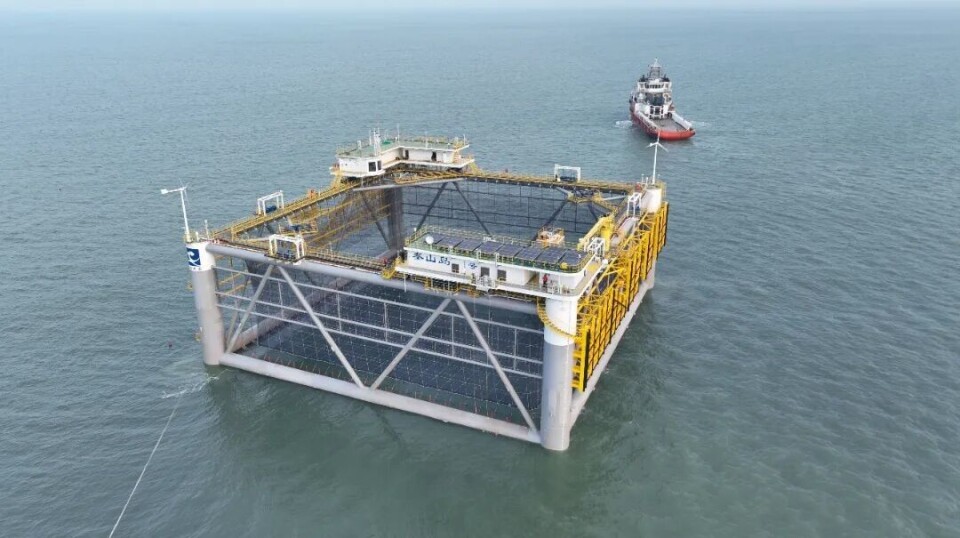


Qinshandao No.1 is Lianyungang’s first large, digitally monitored offshore fish cage built around a steel truss frame supported by the seabed, reports Huang.
Lianyungang invested nearly RMB 70 million (£8m) in the project. Yantai CIMC Blue Ocean Technology Co., Ltd. was responsible for design, construction, and offshore installation.
The all-welded steel truss platform was assembled from 50 structural sections and fitted with approximately 22 kilometres of electrical cable. Huang writes that according to the project team, the main structure uses high-strength steel certified by the China Classification Society (CCS) and was designed to survive a storm with a 100-year return period.
The platform is equipped with a hybrid wind and solar power system with energy storage, automated feeding, underwater stereo cameras, online environmental and water-quality monitoring, computer vision for fish observation, and a centralised control system. A control room, living quarters, dining and kitchen facilities, freshwater production equipment and wastewater treatment allow personnel to stay offshore for extended periods.