
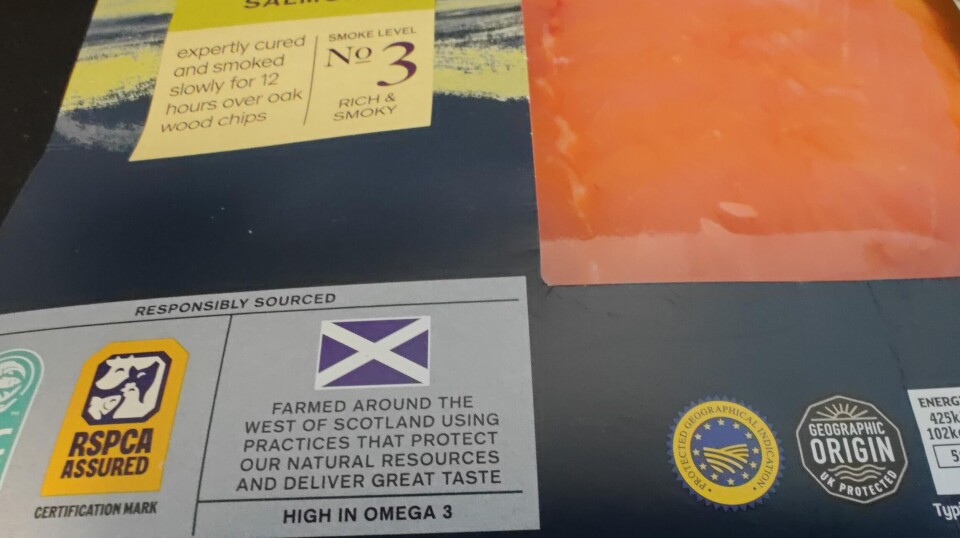
RSPCA updates certification rules
RSPCA Assured has today notified its salmon members of the RSPCA’s new welfare standards for farmed Atlantic salmon which aim to further strengthen fish welfare at every stage of a salmon’s life. Key changes include improved staff training requirements, clearer guidance on managing environmental risks, and more robust welfare outcome assessments.
The new standards come into effect from February 22 next year following the usual three-month notification period to RSPCA Assured members.
Elsa Domoney, senior scientific and policy officer for aquaculture at the RSPCA, said: “The updated salmon standards will help deliver further improvements to the lives of salmon on RSPCA Assured-certified farms.
“They build on our current evidence-based standards to raise fish health and welfare further throughout their lives, including addressing emerging and increasing environmental challenges, such as jellyfish and algal blooms.
Quicker action
“Together, these changes will help producers identify welfare concerns earlier, take quicker action when problems arise, and better manage the overall welfare of their fish.
“The new standards also include information boxes, or ‘iboxes’. These give producers an idea of where the standards might be heading in the future to help with planning, as well as further useful welfare advice.”
Updates to the standards include:
Staff training: more comprehensive fish welfare training and regular competency checks for farm staff
Fish health and welfare monitoring: improved requirements including at least quarterly visits from a fish health professional, as well as strengthened requirements for non-medicinal treatments
Environment: new and more detailed standards to monitor water quality and manage environmental risks (including plankton, jellyfish and oxygen)
Recirculating aquaculture systems (RAS): new standards introduced to enhance fish welfare when using these systems
Mortality and euthanasia: standards to improve the monitoring, recording, and reporting of mortalities that occur during transport to slaughter facilities, as well as updated standards for euthanasia of moribund (sick and dying) fish
Smoltification: new and updated standards on protocols for monitoring fish health and readiness for seawater transfer of juvenile salmon (smolts)
Escape events: new requirements to notify the certification body of escape events
Welfare outcome assessments: strengthened assessments, including the development of scoring protocols, action plans and the reporting of data
Cleaner fish: updates to welfare risk assessments and record-keeping
The updates shared with members today represent only the new and revised requirements being introduced at this stage, rather than a comprehensive list of all standards. The full standards, incorporating these updates, will be published in February.
RSPCA Assured’s salmon standards are used by all of Scotland’s salmon producers except Loch Duart, which last year launched its own welfare standard that it says is better suited to its relatively small size, low-volume production methods and innovative approach.


