

'Don't get left behind by Chile'
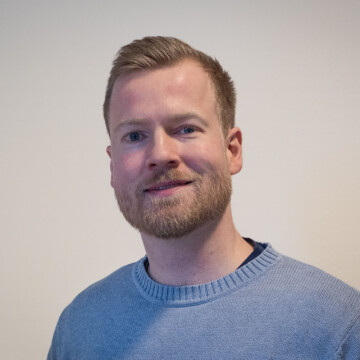
Lerøy Seafood chief executive Henning Beltestad warns of increasing international competition and the need for Norway not to lose its lead in aquaculture.
Published
Modified
Everyday life as the head of a large seafood company is busy, but it gets a little extra hectic during the world's largest seafood fair in Barcelona.
For Lerøy and chief executive Henning Beltestad, it is one of the most important meeting places for both new and existing customers.
"We are very satisfied with the fair. The stand has worked well, and it is an extremely effective arena for meeting our largest customers. If we had to travel around to meet everyone, it would have taken a huge amount of time," he tells Fish Farming Expert's Norwegian sister site, Kyst.no.
Throughout the fair days, there was a lot of traffic at the Lerøy stand, where visitors were able to taste seafood made by the company's own product developers.
"This is the most important single activity we have for those who work towards the markets, and the fair also serves as a gathering arena for the company's international organisation."

Will cut NOK 1 billion
While market activity is high, Lerøy - which co-owns salmon producer Scottish Sea Farms - is preparing a new phase with a clear cost focus. The group has set a goal of reducing costs by NOK 1 billion (£79 million).
Lerøy has a turnover of around NOK 35bn and has about 6,000 employees, and Beltestad describes the group as being in a maturation phase after several years of heavy investments.
"We have grown a lot and invested significantly in both new technology and in our factories in Europe and Norway. Now it's about optimising and fine-tuning the value chain."
The company will continue to invest in technology and aquaculture, but at a somewhat slower pace than previously. He emphasises that the cuts will be implemented broadly across the organisation.
"That NOK 1 billion will be raised throughout the value chain. It's a tall order, but we believe it's possible."
Learned a lot about deep farming
On the production side, Beltestad particularly highlights the focus on deep farming - where fish are kept below the lice layer in submersible pens - as an important development direction in recent years. He describes a clear learning curve since the start.
"We have now released the second generation of fish in several submerged locations, and have learned a lot during the three years we have been working. The processes are significantly better than at the beginning."
He acknowledges that the first phase was not without challenges.
"We had challenges with feeding at the beginning, and had to work closely with suppliers to improve the systems. It is a continuous development process."
Lerøy is also investing in closed systems and last autumn announced the purchase of Aquatraz C2 units supplied by Seafarming Systems. Each unit has a water volume of 70,000m³.
"We will have three units that will be launched right after the New Year. It will be very exciting."
Must prioritise correctly
The Norwegian aquaculture industry experienced solid production growth last year, with an increase of 200,000 tonnes from 2024. For Lerøy, that growth continued in the first quarter of the year, but for the industry in general, the CEO expects more moderate growth this year.
"We see a lot of good work in the industry within biology, fish health and quality. This continues to generate volume growth, but not as strong as last year."
Over the next few years, the new regulations for the Norwegian aquaculture industry will be nailed down. Beltestad will not comment on the Aquaculture Report itself in detail, but says he believes that together the country will be able to find a good future for the fish farming industry.
"I just think that we need to have good discussions together to find the right levels of ambition together with politicians; that we prioritise the right things, and have a common understanding of where we want to be, and how to get there. But we're not quite there yet."

Warning about Chile
Beltestad also uses the opportunity to highlight the international competitive landscape, and points in particular to Chile as a more aggressive player in the salmon market.
"We must not take Norway's position as a leading aquaculture nation for granted. Chile is very aggressive and has clear ambitions for coho, trout, and Atlantic salmon."
Chile's government under new president José Antonio Kast has promised a strong focus on the aquaculture industry and the removal of several regulations. The Lerøy CEO believes this should be a warning to Norwegian authorities.
"It is being noticed, and there are a lot of people in the industry talking about it. Customers want to work with players and countries that contribute to growth. We have to take that into account and make sure we don't fall behind. That is my biggest concern."

Critical of the process
Several other aquaculture leaders have recently spoken out critically about the goal of less than five percent mortality in the aquaculture industry, saying that it is not realistic.
"I am more critical of how such numbers are set than of the ambitions themselves. It seems random."
At the same time, he emphasises that developments in the industry are going in the right direction.
"Mortality is going down. We just have to keep working every day to get better, and then we'll see what's realistic over time."
Concerned for small fish farmers
The long-standing consolidation trend in the aquaculture industry shows no signs of stopping. Many of the small and medium-sized operators feel that they have been hit hardest by new regulations and taxes that have been introduced in recent years.
They have made it much worse for the small ones. That was not the idea when they introduced it, but unfortunately they have missed the mark on, for example, the standard price.
As the head of one of the large producers, Beltestad understands the challenges that smaller companies face.
"We see how demanding it is with requirements - reporting and the whole process has become very complex. And we as a large company have better resources to be able to satisfy the requirements that are there, but it is incredibly demanding for small and medium-sized companies."
The Lerøy boss believes it is good to have a diversity of fish farmers of different sizes, but says the changes in regulations and framework conditions in recent years have not made it easy for the smaller operators.
"On the contrary, they have made it much worse for the small ones. That was not the idea when they introduced it, but unfortunately they have missed the mark on, for example, the standard price. There is a total lack of trust within the industry, and it is disappointing that it should be like that."
The standard price is a figure calculated by the government for the purpose of working out what fish farmers have earned on their fish and what tax they must pay on the value added to those fish during the sea phase. However, fish farmers say it overestimates the amount they actually earn.


